First of all, let me just say that I have never been a proponent of the idea of a historical Jesus Christ. There, I said it! Is the Almighty about to strike me down with a lightning bolt for denying the existence of His only begotten son?
Why sensible, educated, intelligent people would decide to take myth as literal reality, it beats me, but needless to say that if we're willing to ascribe literal physical, historical beingness to the chief character in a Near Eastern "Mystery Play" then there also was literally a little blue deity called Krishna going about Ancient India 500 years before Christ made his appearance in Bethlehem. I don't think I need to give any further analogies, the concept is clear to those who have ears to hear!
Now, in trying to understand this pre-Christian Mystery Drama, where the central figure is given the name Jesus Christ, what do we learn? Well, we learn a great many things, of course, if we are able to decipher the "psychological" teaching which is encoded into its content; which, by the way, very few individuals can actually do, because they lack the empirical method for unlocking the hidden meanings placed there in plain sight.
"Therefore speak I to them in parables: because they seeing see not; and hearing they hear not, neither do they understand." (Matthew 13:13)
This very saying straight from the mouth of the Messiah, of course, is an illustration of my point that only through an effort of understanding can anything of the deeper meaning placed into the mouth of this "messenger of God" be of any value. So how does one go about distilling meaning and culling truth from something like a "sacred writ?" What is they key to understanding anything?
The answer to these questions lies with us. Our inner psychological makeup is the reason why we cannot see or hear, let alone understand. To be able to see, hear and understand the Laws of the Higher Realities, one would need to transform one's way of seeing, hearing and thinking to be able to perceive another simultaneous reality which one could call "higher" or "finer" levels of order
(consciousness) hidden, so to speak, to the ordinary disposition of our attention.
"The disciples asked Jesus: Whence shall the Kingdom come? And Christ answered: Verily, verily I say unto you, it shall not come by expectation. No one shall say: 'See here!' or 'See there!' The Kingdom of Heaven is spread out upon the earth but Men do not see it." (Gospel of Thomas)
And why do Men not see this "higher" reality? Because they first of all do not seek to see it and secondly do not know how to seek or to see.
"Ask, and it shall be given you; seek, and ye shall find; knock, and it shall be opened unto you." Matthew 7:7
What is the message which has been expounded through the Christ story?
It is an esoteric teaching which is meant to awaken individuals to their "Higher Nature" and to guide them in their search for self-knowledge and truth. People have forgotten that finer understanding is possible and have lost their way. The world in which we live is topsy-turvy; Man lives in deceit and lies, worshiping the material and forgetting the spiritual. Man is weak and has wrought upon himself a destiny of devolution and decay, wandering ever further form the source of life and light, which is connected to his inmost sense of Self.
"My people hath been lost sheep: their shepherds have caused them to go astray, they have turned them away on the mountains: they have gone from mountain to hill, they have forgotten their resting place."
Man has forgotten who He is. It is an irony of ironies that the most evolved form of life on earth, the human being, has lost the knowledge and understanding of that which makes Him human. And knowing not that He has lost his way, Man continues to err and to suffer and to make "Paradise" into a living "Hell." E-V-I-L is to L-I-V-E backwards. And so Man, without knowing it -- and precisely because He has no knowledge if it, because He does not question, because He is not cognizant of Himself or of His unconscious actions -- destroys life. Man is a fragmented being, a result of His fragmented consciousness. Thus, He cannot know that He harms Himself and others because He is asleep to His own Self-destructiveness. How could this trend be reversed? How could Man become upright in Himself again?
If Man were to question his motives and his actions and lead an examined life such that his egotism, vanity, pride, and self-love were seen and understood as E-V-I-L impulses, in the sense that they go against the unity of the evolutionary forces of self-conscious manifestation which tend toward the "good," He might perchance struggle against the "devol"-utionary tendencies and strive to become whole again.
"For this people's heart has become calloused; they hardly hear with
their ears, and they have closed their eyes. Otherwise they might see
with their eyes, hear with their ears, understand with their hearts and
turn, and I would heal them."
The word to "heal" comes etymologically from the word to "make whole." Therefore Christ heals the "sick," the "maimed," the "blind" and even "raises the dead." Is this to be "understood" literally? Those who would answer yes are precisely the "blind," "deaf" and "dead" that "Christ" is trying to make whole again.
Literal interpretations of psychological content (instead of figurative or allegorical understanding) leads to dumbness and blindness and eventually death! How to be in living thinking? How to actively question and work towards understanding -- which literally means that which "stands under" and supports meaning?
Saturday, December 22, 2012

Wednesday, November 14, 2012
It's not what you do but how you do it.
He's back!
We have always heard that it's important to do your duty. From earliest recollection:
"Have you done your homework?"; "Did you clean your room?"; "Are you going to do it?"; "I need you to do it ASAP!";
"If you don't eat your meat, how can you have any pudding? How can you have any pudding if you don't eat your meat? Wrong! Do it again! Wrong! Do it again!"
This last little lyric you might recognize as perhaps the best known words to Pink Floyd's "ALL IN ALL IT'S JUST ANOTHER BRICK IN THE WALL." And that is precisely what I'm getting at.
The vast majority of doing is done in total unconsciousness. Do you need proof?
Experiment 1: Look at how you do things.
Experiment 2: Look at how others do things.
Conclusion: The vast majority of doing is done in total unconsciousness.
So, do you agree now? Irregardless (ah yes, a favorite Bushism or product of some other uncult and uncouth uncivilization which now appears in our modern vernacular), you will be converted by the end of this post if you read it, which is no given since you might tune out at any moment.
So, getting back to the point, the point is: "it's not that you do, but how you do it."
Certainly, an artiste would understand. Why, isn't artistic creation all about the sublimation and exaltation of the fact that others will see how great I am?
For instance, we greet people every day, sometimes dozens of different people and do we ever ask ourselves how we perform this greeting; that is, with what mood, what attitude, what coloration? In other words, am I conscious of myself when greeting another human being? Do I even notice when I don't greet another human being but simply ignore them because they are outside my little bubble of perception?
And what of the qualitative approach? For example what we write and how we write, is this important? To communicate well, is that important? You wouldn't think so by looking at people's emails and text messages.And who writes letters anymore? In very fact, I bought some writing paper months ago in order to write some close friends a good, old fashioned missive and have yet to get around to doing so, such is the pull to electronic keyboard entry.
So, the question is: how did we forget that quality is important? Why do we not see that how we do things is just as important, if not more important, than the act of doing?
I have to cook a meal. Do I have any sense of the attention I can have to preparing this meal?
I have to clean the house. (My personal favorite.) Am I conscious of my mood while I'm working?
I have to get dressed and go to work. Am I aware of how I do this?
I believe you understand my point and I even believe you have your very own questions about the engagement necessary to become more conscious of the how am I in this or that act.
Be not deceived; God is not mocked: for whatsoever a man soweth, that shall he also reap. - Galatians 6:7
My little children, let us not love in word, neither in tongue; but in deed and in truth. - John 3:18
By their fruits, you shall know them. - Matthew 7:16
Just so you know, I am not a bible quoting fundamentalist -- quite the contrary (whatever the opposite of a fundamentalist is?) -- but for those who know and understand what I like to call the Qualitative Approach is, the teachings of the Sages are wise.
So here's a Buddhist rendition of it:
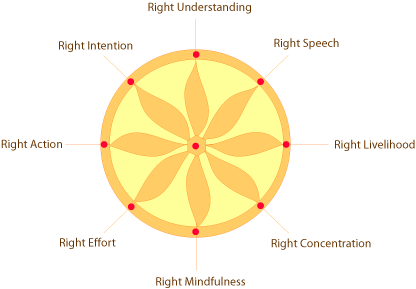
Quality is never an accident; it is always the result of high intention, sincere effort, intelligent direction and skillful execution; it represents the wise choice of many alternatives. - Will A. Foster
See film excerpt form Across the Universe:
http://www.youtube.com/watch?v=Jg_uoixTsbY
And with that I bid you Adieu. Please leave a comment, if you please...
We have always heard that it's important to do your duty. From earliest recollection:
"Have you done your homework?"; "Did you clean your room?"; "Are you going to do it?"; "I need you to do it ASAP!";
"If you don't eat your meat, how can you have any pudding? How can you have any pudding if you don't eat your meat? Wrong! Do it again! Wrong! Do it again!"
This last little lyric you might recognize as perhaps the best known words to Pink Floyd's "ALL IN ALL IT'S JUST ANOTHER BRICK IN THE WALL." And that is precisely what I'm getting at.
The vast majority of doing is done in total unconsciousness. Do you need proof?
Experiment 1: Look at how you do things.
Experiment 2: Look at how others do things.
Conclusion: The vast majority of doing is done in total unconsciousness.
So, do you agree now? Irregardless (ah yes, a favorite Bushism or product of some other uncult and uncouth uncivilization which now appears in our modern vernacular), you will be converted by the end of this post if you read it, which is no given since you might tune out at any moment.
So, getting back to the point, the point is: "it's not that you do, but how you do it."
Certainly, an artiste would understand. Why, isn't artistic creation all about the sublimation and exaltation of the fact that others will see how great I am?
For instance, we greet people every day, sometimes dozens of different people and do we ever ask ourselves how we perform this greeting; that is, with what mood, what attitude, what coloration? In other words, am I conscious of myself when greeting another human being? Do I even notice when I don't greet another human being but simply ignore them because they are outside my little bubble of perception?
And what of the qualitative approach? For example what we write and how we write, is this important? To communicate well, is that important? You wouldn't think so by looking at people's emails and text messages.And who writes letters anymore? In very fact, I bought some writing paper months ago in order to write some close friends a good, old fashioned missive and have yet to get around to doing so, such is the pull to electronic keyboard entry.
So, the question is: how did we forget that quality is important? Why do we not see that how we do things is just as important, if not more important, than the act of doing?
I have to cook a meal. Do I have any sense of the attention I can have to preparing this meal?
I have to clean the house. (My personal favorite.) Am I conscious of my mood while I'm working?
I have to get dressed and go to work. Am I aware of how I do this?
I believe you understand my point and I even believe you have your very own questions about the engagement necessary to become more conscious of the how am I in this or that act.
Be not deceived; God is not mocked: for whatsoever a man soweth, that shall he also reap. - Galatians 6:7
My little children, let us not love in word, neither in tongue; but in deed and in truth. - John 3:18
By their fruits, you shall know them. - Matthew 7:16
Just so you know, I am not a bible quoting fundamentalist -- quite the contrary (whatever the opposite of a fundamentalist is?) -- but for those who know and understand what I like to call the Qualitative Approach is, the teachings of the Sages are wise.
So here's a Buddhist rendition of it:
Quality is never an accident; it is always the result of high intention, sincere effort, intelligent direction and skillful execution; it represents the wise choice of many alternatives. - Will A. Foster
See film excerpt form Across the Universe:
http://www.youtube.com/watch?v=Jg_uoixTsbY
And with that I bid you Adieu. Please leave a comment, if you please...
Monday, September 17, 2012
To Blog or not to Blog, is it a question?
At first when I started this Blog-page, I thought, "hmmm, let's blog..." I like to write and re-read what I've written - it's a narcissistic tendency of mine. Then, I had 3 children. But I've always kinda been cyclically cynical about writing for others, if indeed Blogging could be considered that -- it's on the internet in the public domain, is it not? -- as it just seems like a sheer waste of time. Firstly because I'm not famous, so absolutely no-one cares about anything I have to say in written form or otherwise. Secondly, because, in my most humble opinion (and you know already what that's worth), writing in general is a dangerously neurotic tendency -- like going to therapy and talking to someone else about your problems. It may feel good in the moment but is their any proof positive that it heals one? One might argue just he opposite. “It is not what enters into the mouth that defiles the man, but what proceeds out of the mouth, this defiles the man.”Matthew 15:11.
So, one can easily comprehend the possible conundrum which an enterprise such as blogging confronts a man with. To flog or not to flog, thees iz die quéstion? Whezer itiz nobler in zé mind to shut up zan to expound upon zé inéffable mysteries, yes?
What do you think? (You see the delusional aspect of blogging now in reading this post -- this writer thinks there is someone reading. A cruel joke indeed.) Toodeloo, dear sympathetic reader. Perhaps I'll post again and perhaps I'll simply disappear back into the void of written non-expression. Or, if I exist, I can still write for myself.
Self, are you reading this?
Subscribe to:
Posts (Atom)